Showing posts with label Flickr video. Show all posts

Thursday, January 19, 2012

Passing the time waiting for Wikipedia by musing on SOPA and multimedia information retrieval


It's like the SOPA blackout blacked out my brain or something. I am tired and cranky and feel like I basically spent my day just waiting for Wikipedia to come back on line. I guess I was actually pretty productive, but I did spend a lot of time looking at Twitter. And in fact was looking when a tweet on darkening Flickr photos came through from Mor Naaman and led me to his darkened photo in the screenshot above.

Yes, of course I am a stop SOPA person. If its piracy today, it's free speech under attack tomorrow... my thoughts naturally flow along those lines of logic. If online piracy is indeed a problem, there's gotta be a more creative, effective solution that one concocted by Congress.

But then it occurred to me that maybe SOPA actually would have positive implications for the effectiveness of multimedia retrieval. I mean, hey, if SOPA is going to force website owners to police user-contributed material anyhow, then we should put those website owners to work enforcing complete and consistent metadata.

For every video, every image, SOPA wants to know who it belongs to. Well, we could also require a complete description of its visual content. Stop Online Messy Metadata! Let's propose a SOMMA.

Let's require each multimedia items to have a minimum number of tags, and have those tags to be drawn a set of concepts organized in a formal ontology. The US Federal Government could actually start publishing one -- updating it each year to cut down on those concepts known to not contribute constructively to retrieval. (We could start with LSCOM.)

Let's require people posting videos to make sure that their speech transcripts have been corrected are are flawless (...avoid using words not in the vocabulary of the speech recognizer) and that their songs are published with links to pages containing the lyrics (...avoid including references to obscure Russian novels).

And then to control that overwhelming multimedia flood, we can set limits. Individuals should only publish a small quota of items, so that these can all be kept in a central index and found by a topical look up -- Dewey Decimal Classification style.

Formulating an information need is easy: just choose one from a well organized standardized list, defined to cover everything you could possible want to see in an image.

Basically, if they put their minds to it the US Federal Government could really improve multimedia retrieval.

Well, OK. I'm a stop SOPA person because I like my job and I like my messy world and the messy metadata that goes with it.

In its subtle way, Flickr is telling us that its actually really difficult as an Internet user to be pro-SOPA. The caption on the blacked out photo above is:

A Flickr user has darkened this photo for up to 24 hours as a symbolic gesture to raise awareness about the potential impact of two pieces of pending U.S. anti-piracy legislation - SOPA (The Stop Online Piracy Act) and PIPA (The Protect IP Act).

While the inclusion of this blackout screen is merely a symbolic gesture -- not an actual allegation that this photo violates any copyright -- a user wanted you to take note of the harmful impact these bills could have on innovation online. For more information see http://blog.flickr.net

And then at the bottom there's a link labeled:

Show the photo anyway. I do not wish to participate. Do not darken my photo.

OK. Wait a minute, if I click "Do not darken my photo" is that then literally or symbolically? Flickr is subtly showing us how natural the extension is from our daily use habits to the decision to support the principle-based movement to stop SOPA and preserve the basic freedom of Internet flow.

Look at how this works: Symbolically, what the darkened photo is, is a big message screaming "Do not darken my photo!!" to the US Federal Government. So aren't I really by clicking this link demonstrating that I am against a specific darkened photo, which is nearly the same thing as being against darkened photos in general? And from there also against legislation that might blot out some of that rich multimedia primordial soup that we take in, digest and put out as conversations, comments, more multimedia, the fabric of our online lives?

Hey, SOPA, leave my Internet alone. I do not wish to participate. I want my brain lit back up.

Sunday, October 24, 2010

MediaEval 2010 Workshop Report

We were delighted that Bill Bowles attended the MediaEval 2010 workshop and that he made us our own MediaEval video trailer, in which he tells the story of MediaEval from his own point of view. The MediaEval 2010 Affect Task was devoted to analyzing Bill's travelogue video from his Travel Project and ranking it by how boring viewers reported it to be. As a filmmaker, another rational reaction would be "Who are these people, what did they do to my video? I don't want to get anywhere near them!" But instead, he came, participated and told us about ourselves using the very same medium we devote so much effort to studying.


I was amazed at how quickly this video accumulated views, it quickly outstripped any video I've ever posted to the Internet. However, if video is not your thing and you want the text version of what happend here is the text of a workshop report written for a project newsletter.

MediaEval 2010 Workshop Report

The MediaEval 2010 workshop was held on Sunday, October 24, 2010 in Pisa, Italy at Santa Croce in Fossabanda. MediaEval is a benchmarking initiative for multimedia retrieval, focusing on speech, language and contextual aspects of multimedia (geographical and social context) and their combination with visual features. Its central sponsor is the PetaMedia Network of Excellence. In total, four tasks were run during MediaEval 2010. To approach the tasks, participants could make use of spoken, visual, and audio content as well as accompanying metadata. Two “Tagging Tasks’ (a version for professional content and one for Internet video) required participants to automatically predict the tags that humans assign to video content. An ‘Affect Task’ involved automatic prediction of viewer-reported boredom for Travelogue video. Finally, a ‘Placing Task’ required participants to automatically predict the geo-coordinates of Flickr video. The Placing Task was co-organized by PetaMedia and Glocal. It was also given special mention in the talk of Gerald Friedland entitled “Multimodal Location Estimation” in the “Brave New Ideas” session at ACM Multimedia 2010.

During the MediaEval 2010 workshop, researchers presented and discussed the algorithms developed and the results achieved on the MediaEval 2010 tasks. The workshop drew 29 participants from 3 continents. More information about the 2010 results including participants’ short working notes papers, are available at: http://www.multimediaeval.org/mediaeval2010
Currently, MediaEval 2010 participants are working towards a special session at the 2010 ACM International Conference on Multimedia Retrieval (ICMR 2010), which will be dedicated to presenting extended results on MediaEval 2010 tasks.

Mediaeval 2011 will be organized again with sponsorship from PetaMedia and in collaboration with other projects from the Media Search Cluster. The task offering in 2011 will be decided on the basis of participants' interest, assessed, as last year, via a survey. At this time, we anticipate that we will run a Tagging Task and a Placing Task as well as a couple innovative other, new tasks as dictated by popularity. If you are interested in participating in MediaEval 2011 or if your project would like to organize a task, please contact Martha Larson m.a.larson@tudelft.nl Additional information on MediaEval 2011 is available on the website: http://www.multimediaeval.org

Sunday, November 22, 2009

Lemonface

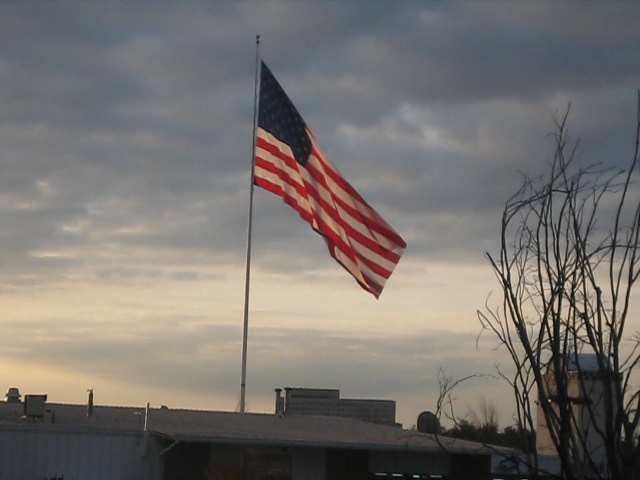
Since I was going to be mentioning Flickr Video in my presentation about VideoCLEF at last week's TRECVid 2009 workshop, I decided I should try and make one. This video was shot out the window in the morning. And yes, I dutifully made sure it was properly geo-tagged as Gaithersburg. Sure indeed, capturing the ripple makes the flag image come alive..."It's like a photo, but it moves!"

Is Flickr video a long photo?

Maybe it's even a bit too alive. The ripples would be more dramatic had the camera been stabilized...you can see I'm not holding it still. Where does it end? Interactive moving pictures, a la Harry Potter's newspaper, I suppose.

Immediately after downloading this video off of my camera, I lost it. My first reaction: Had I downloaded all of the pictures on the camera? (Yes!) Only then did I start fretting about how much money I paid for the camera, a Cannon PowerShot SD1100, and how much it would cost to replace it.

I felt it viscerally: it's not just a bunch of bits! Content matters to us in a very personal way. Since I didn't empty the camera memory card, are my photos are floating around out there, in whatever space that the photos on lost cameras go. What if this space turns out to be the Internet? Would I be embarrassed?

In my opinion the most embarrassing picture on the camera is a lemon-face from Jay and Silent Bob. And yes, there is also a corresponding lion-face out there...somewhere. I have this most pressing information need: "Where is my camera?"